2026-10-06 · Carlos Rodriguez
How Winter Rains Affect Sewer Lines in Los Angeles
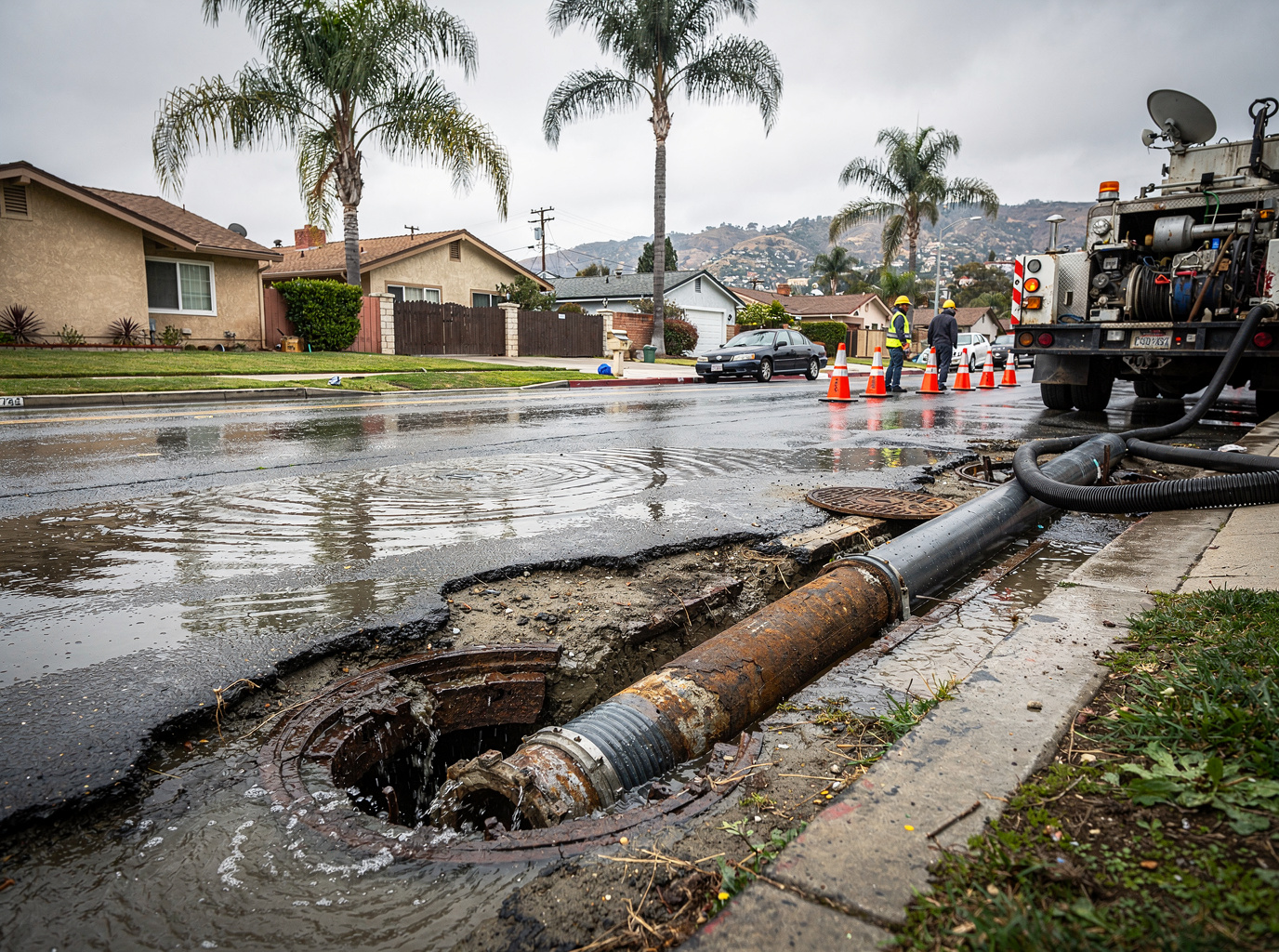
Los Angeles's winter rains, while a welcome sight after our warm, dry summers, can pose significant challenges to the integrity of underground sewer lines. The increased moisture and saturated soil can exacerbate existing vulnerabilities, leading to a higher incidence of issues such as tree root intrusion, pipe corrosion, and soil shifting. Homeowners in older neighborhoods like Hollywood, Venice, or Koreatown, where infrastructure might be decades old, often experience these problems more acutely. The sudden surge of water entering the system can overwhelm compromised pipes, turning a minor crack into a major backup or even a collapsed sewer line, requiring immediate attention from a professional.
Increased Risk of Tree Root Intrusion
One of the most common and damaging effects of winter rains in Los Angeles is the acceleration of tree root intrusion into sewer lines. Our city, from the historic streets of Downtown to the leafy avenues of Pasadena and Glendale, is rich with mature trees. During dry periods, tree roots naturally seek out moisture, and sewer lines, with their constant supply of water and nutrients, become prime targets. When winter rains arrive, the surrounding soil becomes saturated, making it easier for these roots to penetrate even the smallest cracks or loose joints in pipes. Once inside, they grow rapidly, creating blockages that can lead to slow drains, gurgling toilets, and eventually, severe sewer backups. This is particularly prevalent in areas with older clay sewer pipes, which are more susceptible to root penetration.
The relentless pressure from expanding roots can also cause pipes to crack or even completely collapse. We often see this in established neighborhoods like Silver Lake or Echo Park, where homes might have original sewer laterals. Addressing tree root damage often requires specialized techniques like hydro jetting to clear blockages or more extensive Sewer Line Repair or Sewer Line Replacement if the damage is severe. Proactive steps, such as regular sewer camera inspections, can help identify and mitigate these issues before they escalate into an emergency during heavy rainfall.
Soil Saturation and Pipe Movement
The unique geology of the Los Angeles area, combined with our Mediterranean climate, means that periods of intense winter rain can lead to significant soil saturation, which in turn affects underground utilities. When the soil around your sewer pipes becomes waterlogged, it loses its stability. This can cause soil shifting or settling, putting immense stress on rigid sewer lines. Pipes that were once stable can shift, leading to misaligned joints, cracks, or even complete breaks. Homes built on hillsides, common in areas like Mount Washington or parts of Burbank, are particularly vulnerable to this phenomenon, as saturated soil can lead to landslides or slumping that directly impacts buried infrastructure.
Older homes, especially those in areas like Boyle Heights or East Los Angeles, often have sewer lines made of materials like cast iron or vitrified clay. While durable, these materials are less flexible than modern PVC pipes and are more prone to cracking or separating at joints when subjected to ground movement. The constant expansion and contraction of soil with varying moisture levels can gradually weaken pipes over time. This kind of stress can result in a Cracked Sewer Pipe or contribute to a Collapsed Sewer Line, necessitating urgent repairs.
Increased Inflow and Infiltration (I&I)
Winter rains bring a substantial increase in inflow and infiltration (I&I) into the sewer system. Inflow refers to stormwater that directly enters the sanitary sewer system through illicit connections, such as downspouts or sump pumps connected to the sewer lateral, or through cracked manholes. Infiltration, on the other hand, is groundwater that seeps into the sewer pipes through cracks, leaky joints, or porous pipe materials. During heavy downpours, especially in low-lying areas or neighborhoods with older, deteriorated infrastructure like parts of South Central or Watts, the volume of I&I can overwhelm the system.
When the sewer lines are operating beyond their capacity due to excessive I&I, it creates immense pressure within the system. This pressure can lead to sewer line backups into homes and businesses, causing significant property damage and health hazards. We frequently see these issues in areas where homes have older, less robust sewer lines. The increased flow can also accelerate the erosion of pipe materials and wash away supporting soil around the pipes, contributing to bellies or sags in the line. Understanding the impact of I&I is crucial for maintaining a healthy sewer system, especially when considering the costs associated with repairs. For a deeper dive into financial implications, you might find our article on What Influences Sewer Line Repair Costs in Los Angeles helpful.
Accelerated Pipe Corrosion and Deterioration
While Los Angeles enjoys a relatively dry climate for much of the year, the cyclical nature of our winter rains can accelerate the corrosion and deterioration of sewer pipes. The constant presence of moisture, combined with varying soil conditions and the chemical composition of wastewater, creates an environment ripe for pipe degradation. Older pipes, particularly those made of cast iron or clay, are more susceptible to this process. Cast iron can rust and pit, leading to weakened walls and eventually holes, while clay pipes can become brittle and crack.